
.webp)
HRV: A Metric Providing Insight into Nervous System Health
When most people think about heart rate, they picture a single number —60, 72, 80 beats per minute. Steady. Metronomic. But your heart isn't ametronome. The tiny, moment-to-moment variations in the time between yourheartbeats hold one of the most revealing windows we have into your health,your capacity to handle stress, and your ability to bounce back when lifedemands it.
That window is called heart rate variability, or HRV. It’s gaining more attention in the health and wellness space and it’s a common metric measured with wearables like the oura ring, Garmin or AppleWatch. However at HeartMath Institute, they've spent decades studying it — and helping people learn to shift it in their favour. This is why I've recently become a HeartMath certified practitioner - to use this HRV data to better assess patients for insight into nervous system function and to provide actionable strategies to improve it with specific techniques.
What HRV Actually Measures
Heart rate variability is the naturally occurring variation in the time interval between consecutive heartbeats. Even when your heart is beating at a comfortable resting pace, the gap between one beat and the next is constantly changing — speeding up slightly as you inhale, slowing as you exhale, responding to your thoughts, emotions, and environment.
This variation is a direct reflection of your autonomic nervous system, the part of you that runs the show behind the scenes: your breathing, digestion, immune response, and stress reactions. The autonomic system has two main branches. The sympathetic branch is your accelerator — it mobilizes you for action. The parasympathetic branch is your brake — it calms, restores, and repairs. HRV is essentially a real-time readout of how these two branches are working together.
Interestingly, HRV provides long-term insight into nervous system functioning. A bad day doesn’t give you a low HRV score. It’s the accumulation of weeks, months and years.
Here's the key insight: a heart that can flexibly adjust its rhythm is a healthy, adaptable heart. Higher HRV is what we're after - it generally reflects a nervous system that can respond appropriately to whatever a moment requires — ramping up when you need focus and energy, settling down when it's time to recover. Lower HRV often signals a system that's stuck, depleted, or overloaded, with less capacity to adapt. A low HRV has been associated with: depression, panic disorder, fatigue, hypertension, diabetes mellitus, coronary heart disease, hypertension, and weight gain. Numerous studies have now clearly demonstrated that decreased HRV predicts increased risk of sudden death and mortality from both coronary heart disease.
This is why HRV has emerged as such a valued metric across medicine, sports science, and psychology. It's non-invasive, measurable in minutes, and it correlates with a remarkable range of outcomes — cardiovascular health, emotional regulation, sleep quality, cognitive performance, and how well you recover from physical and mental demands. HRV tends to decline naturally with age and drops under chronic stress, which makes it not just a snapshot of health but a meaningful indicator of resilience over time.
Since the 1980s, low HRV and the effects of depletion on the autonomic nervous system (ANS) have been associated with numerous stress-related disorders and medical conditions including: depression, panic disorder, fatigue, hypertension, diabetes mellitus, heart disease, hypertension, and weight gain. Numerous studies have now clearly demonstrated that decreased heart-rate variability predicts increased risk of sudden death and mortality from both coronary heart disease and noncoronary causes, especially cancer and mortality from all causes.
Beyond the Number: The Power of a Coherent Rhythm
At HeartMath, they’ve discovered something that goes a step further thanmeasuring how much your heart rate varies. What matters just as much is the pattern of that variation.
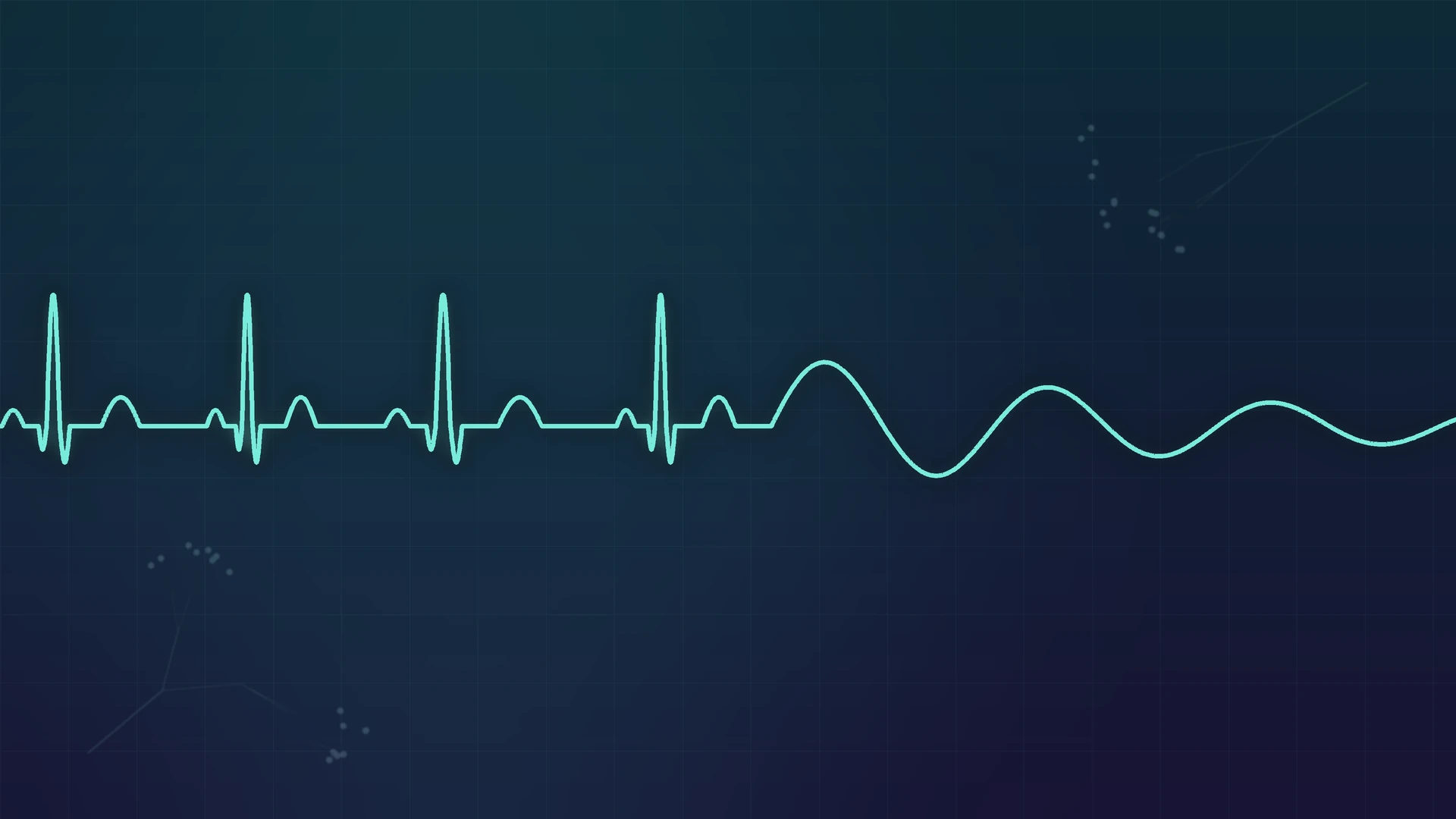
When you're frustrated, anxious, or overwhelmed, your heart rhythm pattern tends to look jagged and disordered — an erratic scribble on the screen. But when you're feeling calm, appreciative, or genuinely cared for, something changes. The rhythm smooths out into an ordered, flowing, wave-like pattern. We call this state coherence.
Coherence isn't just a prettier line on a graph. It reflects a state in which your heart, brain, and nervous system are synchronized and working in harmony. In this state, the body's systems operate more efficiently, communication between the heart and brain is optimized, and you tend to think more clearly and feel more emotionally steady. Coherence is a specific, physiological, measurable state — and it's one you can learn to create on purpose.
This matters because the heart isn't simply taking orders from the brain.The heart sends a constant stream of signals up to the brain, and those signals influence the regions involved in emotional processing, attention, and decision-making. When your heart rhythm is coherent, it sends a very different message to your brain than when it's chaotic. In practical terms, a coherent heart helps create a coherent mind.
What Stress Resilience Really Means
Stress resilience is one of the most misunderstood ideas in wellness. It doesn't mean being unbothered, avoiding challenge, or gritting your teeth through pressure. Resilience is the capacity to prepare for, recover from, and adapt to stress, adversity, and change — and then to return to a balanced, energized state.
We find it helpful to think of resilience as a reservoir of inner energy that you draw on across four domains: physical, emotional, mental, and spiritual. Every stressor — a tense meeting, a hard conversation, poor sleep, worry that loops through the night — draws down that reserve. The question isn't whether you'll face stress. You will. The question is how quickly and completely you refill the reserve and recover your balance.
This is where HRV and resilience meet. A person with greater HRV and the ability to shift into coherence has, in effect, a deeper resilience reservoir and a faster path back to equilibrium. They don't necessarily face fewer challenges — they simply spend less time depleted by them. Two people can experience the identical stressful event; the resilient one recovers in minutes while the other carries the tension for hours or days. That difference, accumulated over months and years, has profound consequences for health.
How This Contributes to Your OverallHealth
The reason HRV and coherence matter so much is that chronic stress and autonomic imbalance don't stay contained. When the nervous system is stuck in a state of depletion, the effects ripple outward through the entire body.
Sustained stress elevates cortisol and disrupts the delicate hormonal balance your body depends on. It taxes the cardiovascular system, interferes with restorative sleep, dampens immune function, clouds thinking, and drives the anxiety and emotional reactivity that so many people struggle with. Low HRV is frequently a fingerprint of this state.
Building HRV and coherence works in the opposite direction. When you regularly shift into a coherent state, you help restore autonomic balance, support healthier hormonal patterns, and give your body more time in the restore-and-repair mode it needs. People who practice these skills often report better sleep, steadier moods, sharper focus, calmer reactions under pressure, and a greater sense of ease in daily life. Rather than treating symptoms one at a time, you're strengthening the underlying system that influences all of them.
The Good News: This Is Trainable
Perhaps the most empowering part of this science is that HRV and coherence aren't fixed traits you're simply born with. They're capacities you can develop — and the entry point is surprisingly accessible.
It begins with the breath. Through HeartMath certification, Dr. McKee has been trained in these breathwork techniques. She uses biofeedback technology and software to measure and track baseline HRV, coherence scores and can monitor progress overtime to encourage enhanced stress resilience.
With practice, this becomes something you can call on in the middle of a stressful moment — before an important conversation, in the grip of frustration, or when your mind is racing at 2 a.m. Over time, these repeated shifts don't just help in the moment; they help raise your baseline resilience so that you meet life's demands from a steadier, more balanced place. This is preventative medicine at its finest.
The Bottom Line
Your heart is doing more than pumping blood. Its rhythm is a continuous conversation between your body, your brain, and your emotions. A flexible,coherent heart rhythm reflects a nervous system that's balanced, adaptable, and resilient. And unlike so many aspects of health that feel out of our hands, this one responds directly to skills you can learn. So even when our life circumstances are challenging and stress is ever-present, the idea that “there’s nothing I can do” is so far from the truth.
The heart has a rhythm. Learning to work with it may be one of the most practical, science-grounded things you can do for your health, your resilience, and your quality of life.
Recent Blog Articles
HRV: A Metric Providing Insight into Nervous System Health

Upcoming 14 Day Gut Health Challenge
